I was sitting in an airport café with a flight to catch.
Breakfast had arrived.
The coffee was good.
The service had been friendly.
Then I wanted to leave.
I looked around for the waitress.
She was nowhere to be seen.
She wasn’t doing anything wrong.
She was simply busy serving other customers.
So I waited.
And waited.
Eventually she appeared.
I asked for the bill.
She disappeared again.
A few minutes later she returned with the card machine.
I tapped my card.
She printed the receipt.
I thanked her and hurried to the gate.
It struck me afterwards that I hadn’t needed a waitress.
I needed one behaviour.
I’d like to pay my bill.
The restaurant already knew everything else.
It knew where I was sitting.
It knew what I’d ordered.
It knew the total.
It knew the VAT.
It knew my bill was ready.
The only thing missing was a simple way for me to express my intent.
Imagine instead walking over to a small kiosk.
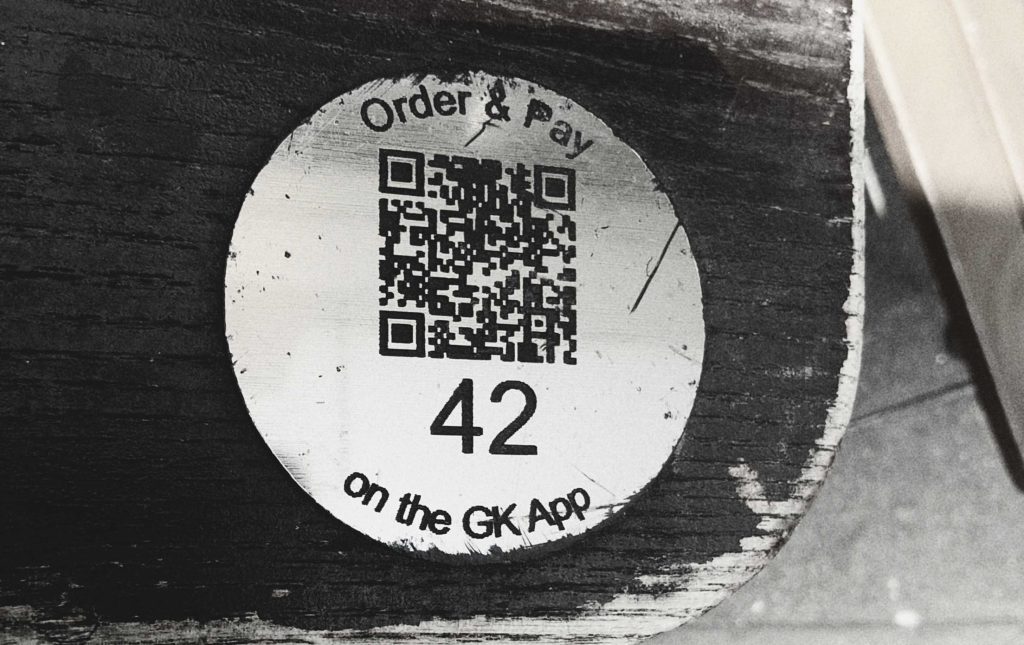
Or simply scanning a QR code.
How can I help you today?
I’d like to pay my bill.
“Certainly. You’re at table 32. Your total is €100.”
I tap my phone.
A receipt arrives in my inbox.
Done.
No app.
No registration.
No downloading restaurant software.
No frustration.
This isn’t really about restaurants.
It’s about almost every piece of software we use today.
For years we’ve been buying applications and then teaching our organisations how to fit inside them.
Every implementation starts with the same conversation.
“This is how the software works.”
Then comes the inevitable compromise.
“We’ll have to change that process.”
Or…
“That’s just the way the system does it.”
Software becomes something we adapt ourselves to.
I think we’ve accepted that for far too long.
Perhaps we’ve been asking the wrong question.
Instead of asking:
What software do we need?
Perhaps we should ask:
What behaviours does our organisation need?
Book an appointment.
Pay a bill.
Approve an invoice.
Send a newsletter.
Welcome a new employee.
Publish release notes.
They’re all behaviours.
Not applications.
This is one of the ideas behind Vork.
Not replacing every system an organisation already owns.
Teaching those systems how to behave.
Every organisation is different.
Its culture is different.
Its language is different.
Its processes are different.
Why should they all be forced to think like the same software?
Software should adapt to organisations.
Not the other way around.
Sometimes I wonder if, ten years from now, we’ll look back at today’s enterprise software in the same way we look at command lines from the 1980s.
Necessary.
Powerful.
But asking far too much of the person sitting in front of the keyboard.
Perhaps the next generation of software won’t be defined by the applications we install.
Perhaps it will be defined by the behaviours our organisations choose to expose.
You won’t ask whether a café has an app.
You’ll simply know…
It speaks Vork.