That’s a ridiculous title.
Software isn’t ending.
In fact, I think we’ll write more software over the next decade than at any point in history.
So why call this essay The End of Software?
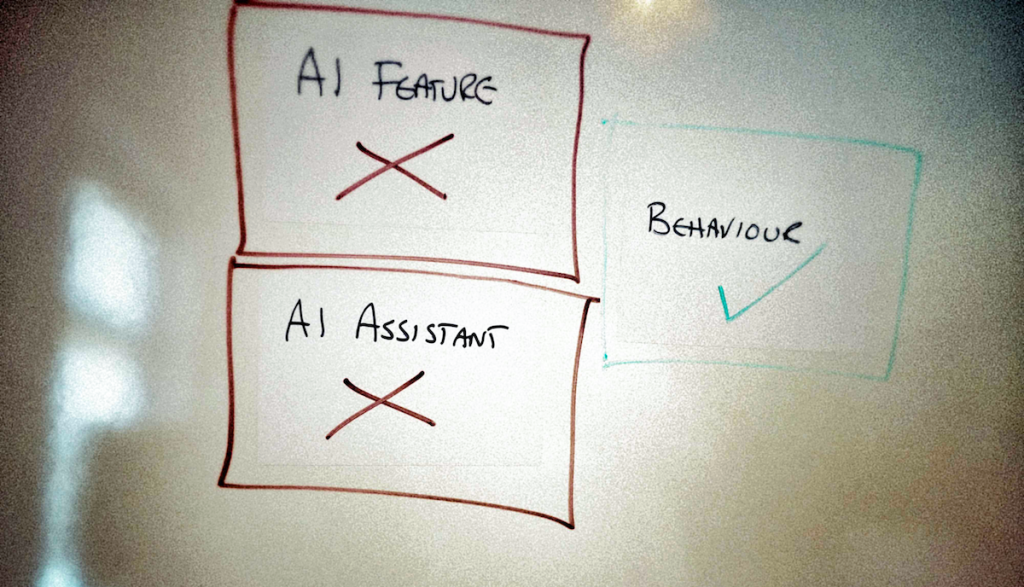
Because I think we’re reaching the end of software as the thing organisations buy.
What organisations really need isn’t another application.
It’s another behaviour.
For most of my career I’ve built software products.
SSH libraries.
VPNs.
Identity platforms.
Developer tools.
Like most software companies, we’d identify a problem, build an application to solve it and then spend years refining that application.
That’s simply how software has always been built.
Lately though, I’ve started wondering if we’ve been packaging the wrong thing.
A few months ago, if you’d asked me how to add a new capability to Vork, I’d probably have answered:
“We’ll add another feature.”
Today I’d ask a completely different question.
What behaviour are we trying to teach?
That tiny change in language has changed the entire architecture.
Take accounting.
My first thought was almost comically ambitious.
Could Vork replace Xero?
The more I thought about it, the more I realised I’d asked the wrong question.
Accounting software isn’t really software.
It’s accounting expertise expressed through software.
The chart of accounts.
Double-entry bookkeeping.
VAT rules.
Payroll legislation.
Year-end reporting.
None of those things were invented by software companies.
Software companies simply encoded the expertise.
So why should they be the only people allowed to publish it?
Imagine instead that your accountant creates an Accounting Behaviour Pack.
Not because they’re software developers.
Because they’re accountants.
They understand tax.
They understand payroll.
They understand legislation.
When the Finance Act changes, they update the behaviour.
When HMRC introduces a new submission requirement, they publish a new version.
People don’t install an accounting package.
They install accounting expertise.
The same thought occurred to me with customer support.
Why should I write the world’s best support behaviours?
Why wouldn’t a company like Zendesk publish them?
Who understands customer support better?
Likewise with HR.
Or healthcare.
Or procurement.
Or legal workflows.
Every profession already contains the expertise.
Software has simply been the medium used to deliver it.
I don’t want Jadaptive to write every behaviour for Vork.
In fact, I hope we write very few.
Our job isn’t to become experts in accounting, payroll, healthcare, hospitality and logistics.
Our job is to create the language those experts use to express what they already know.
That’s a much more exciting challenge.
People often ask how open source projects become successful.
The answer is surprisingly simple.
The maintainers don’t write everything.
They create an architecture that invites contribution.
Linux doesn’t have one author.
Git doesn’t have one author.
Kubernetes doesn’t have one author.
Their creators became stewards rather than owners.
That’s exactly how I hope Vork evolves.
Perhaps the most exciting part is that people don’t just contribute for free.
Expertise has value.
An accountant might publish free bookkeeping behaviours and sell a commercial payroll pack.
A security consultant might publish authentication behaviours alongside paid compliance support.
A hospitality company might maintain the industry’s best restaurant behaviours.
The framework remains free.
The expertise becomes the business.
That’s exactly how it should be.
For fifty years we’ve built software applications.
Perhaps the next fifty years will be about something else.
Perhaps software itself fades into the background.
Perhaps organisations stop buying applications and start teaching computers how they work.
Not through code.
Through behaviours.
I don’t think software is disappearing.
I think it’s changing shape.
The application is no longer the product.
Behaviour is.